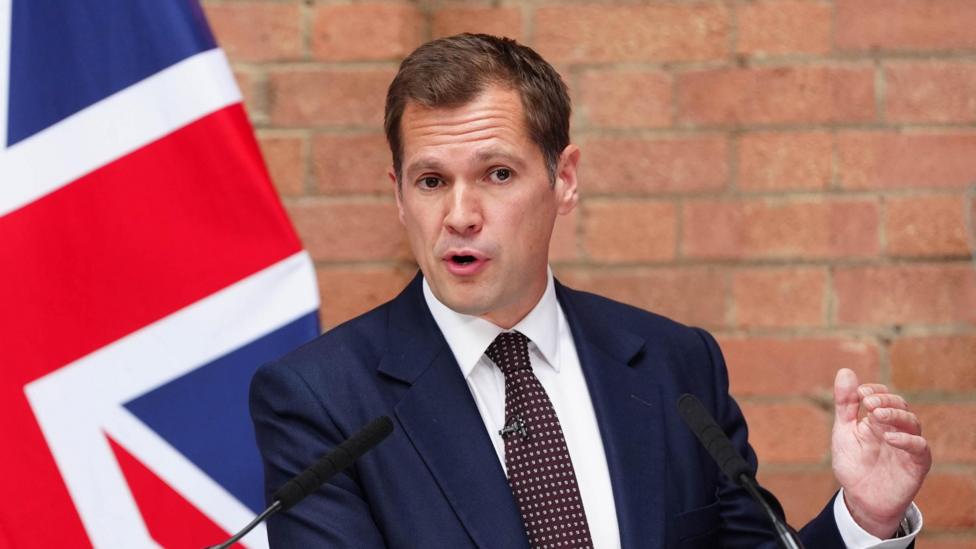
Reform UK has unveiled a series of economic proposals focused on business deregulation and customer service accountability within the nation's tax authority. The announcement, delivered by the party's economy spokesperson Robert Jenrick during a media briefing in central London, targets perceived shortcomings in HM Revenue and Customs.
Under the newly proposed policy, individuals left waiting on the telephone for an adviser for longer than thirty minutes would receive a thirty-pound reduction on their tax liabilities. To guard against potential misuse, the financial compensation would be capped at twice per individual within a single tax year. Furthermore, the compensation scheme would be paired with measures directly linking the financial bonuses and compensation of senior tax agency executives to measurable customer service benchmarks.
Jenrick criticized the current operational standards of the tax office, describing the handling of callers as disrespectful to ordinary citizens. The proposals draw upon past criticisms from parliamentary watchdogs regarding telephone access and dropped calls, issues that have previously strained public confidence in the administration of the tax system.
In response to the announcement, representatives for the tax authority defended their recent performance, noting that operational standards have experienced substantial recovery. Officials stated that typical telephone queuing durations now hover around eleven minutes, with the vast majority of interactions successfully shifting toward digital platforms and the official mobile application. The agency maintains that phone lines are primarily reserved for complex cases, vulnerable individuals, and those unable to access digital tools.
Alongside the tax office reforms, the party introduced sweeping plans to dismantle existing domestic data privacy regulations inherited from European Union legislation. Jenrick argued that current compliance frameworks impose excessive administrative burdens on technology enterprises and small businesses. Under a Reform administration, these mandates would be substituted with a streamlined framework inspired by New Zealand's privacy standards, which are designed to reduce regulatory hurdles while maintaining baseline recognition from international partners.
Political opponents swiftly criticized the data privacy proposals, with representatives from the Labour Party arguing that the changes would remove essential protections safeguarding personal information. The governing party dismissed the measures as impractical and irresponsible. Meanwhile, the tax authority continues to manage seasonal spikes in telephone inquiries as taxpayers navigate ongoing reporting deadlines.
Reporting based on coverage first published by BBC News. Read the original report at BBC News.


