Researchers have uncovered a novel variation of a foundational physics principle originally identified nearly a century and a half ago. According to recent reports, scientists have successfully demonstrated that the Hall Effect can function within the plane of a material, challenging long-standing assumptions in electromagnetism. This breakthrough opens up new avenues for studying electronic transport and could eventually influence the development of advanced semiconductor devices.
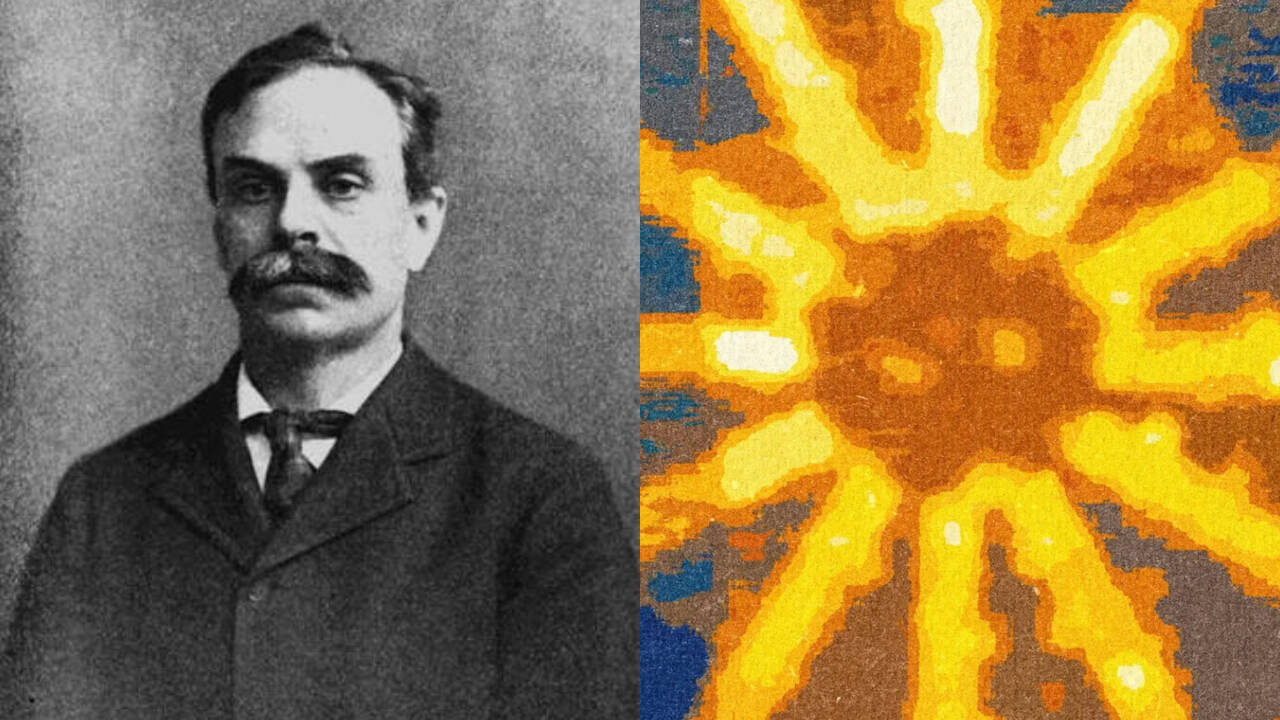
The classic Hall Effect was first documented in 1879 by the American physicist Edwin Hall. It describes how a magnetic field applied perpendicularly to a current-carrying conductor generates a voltage difference across the material, perpendicular to both the current and the magnetic field. This phenomenon has served as a cornerstone of solid-state physics for generations, finding widespread use in magnetic field sensors, computer hard drives, and electronic switches.
Until now, the traditional understanding of the effect dictated that the transverse voltage generation strictly required a perpendicular geometric alignment between the magnetic field and the current flow. The recent findings reveal that under specific conditions, the phenomenon can also manifest in-plane. This unexpected behavior introduces a new dimension to how scientists analyze the interplay between magnetic fields and electrical currents inside modern materials.
The discovery was achieved through sophisticated experimentation and advanced material analysis, building upon decades of incremental progress in condensed matter physics. Researchers meticulously observed electronic responses in specialized material systems where standard theoretical models previously fell short. By examining these anomalies closely, the scientific team was able to isolate and confirm the planar version of the phenomenon.
While the breakthrough remains in the realm of fundamental research, it holds significant potential for future technological applications. Understanding how charge carriers behave in these alternative configurations could lead to more efficient electronic components and novel magnetic memory architectures. As laboratories continue to investigate the underlying mechanics of in-plane transport, the scientific community anticipates further insights into the complex behavior of electrons in restricted geometries.
Reporting based on coverage first published by The Times of India. Read the original report at The Times of India.