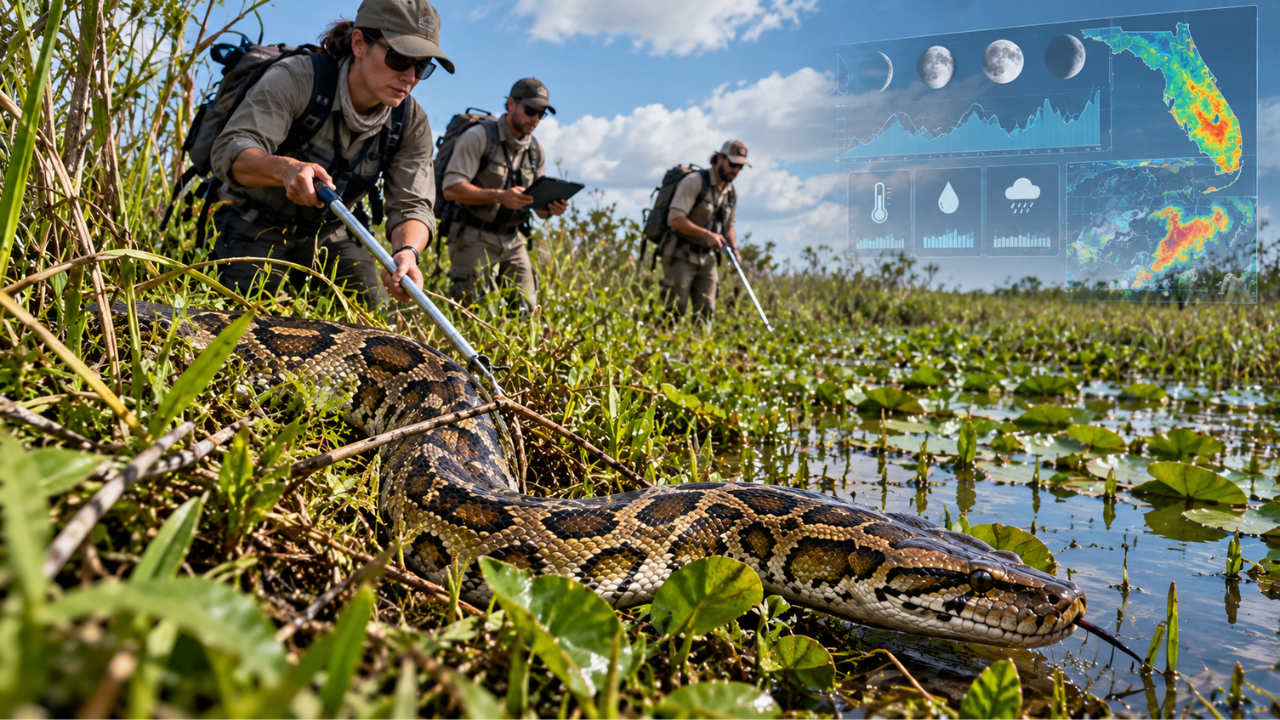
Researchers in Florida have turned to artificial intelligence in an effort to manage the state's growing population of invasive Burmese pythons. By analyzing environmental data and past capture records, scientists have developed predictive models to determine when these large snakes are most vulnerable to being found and removed.
The Burmese python has posed a significant ecological challenge to southern Florida for decades, particularly within the fragile ecosystem of the Everglades. Lacking natural predators, the snakes have multiplied rapidly and consumed vast numbers of native mammals and birds. Traditional removal methods often rely on chance encounters or the grueling efforts of trained hunters working across vast, remote wetlands.
The new approach utilizes advanced machine learning algorithms to process various factors influencing python behavior and visibility. Variables such as weather patterns, seasonal shifts, temperature changes, and hydrological conditions are evaluated to forecast peak activity times. By narrowing down specific windows when pythons are more likely to leave their hiding spots or move about, wildlife management teams can deploy resources much more efficiently.
Experts hope this technology will significantly improve the success rate of eradication programs. Because the Everglades are notoriously difficult to navigate, strategic deployment based on data-driven predictions could save valuable time and operational costs. Conservationists emphasize that controlling the python population is crucial for giving native species a chance to recover from steep population declines.
While artificial intelligence offers a promising new tool in the ongoing environmental battle, authorities note that it remains part of a broader, multi-faceted strategy. Field teams will continue to rely on traditional tracking methods and community reporting programs alongside the new predictive insights. Continued research and monitoring will be necessary to refine the algorithms and adapt to changing environmental conditions in the region.
Reporting based on coverage first published by The Times of India. Read the original report at The Times of India.