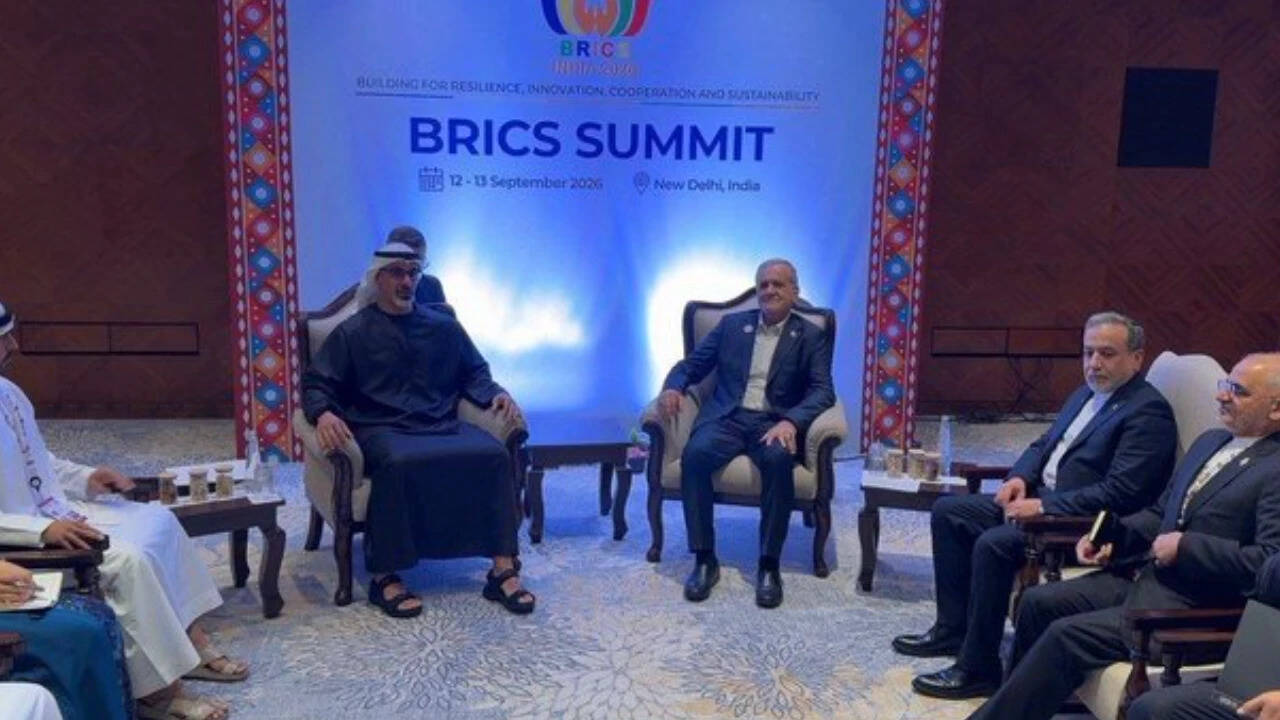
India has utilized its diplomatic engagement within the BRICS framework to help facilitate dialogue amid escalating tensions in the Middle East. Recent diplomatic activities highlighted a significant encounter between the crown prince of the United Arab Emirates and Iranian President Masoud Pezeshkian, underscoring ongoing international efforts to promote regional stability.
The high-level discussions occurred against a backdrop of complex geopolitical challenges across the region. New Delhi has consistently maintained that diplomatic communication channels must remain open among key Middle Eastern stakeholders to prevent further escalation. By fostering an environment conducive to dialogue, international partners hope to encourage peaceful resolutions to long-standing disputes.
India maintains strong, multifaceted relations with both Gulf nations and Iran, positioning it as an influential voice in the broader developing world. The country's diplomatic strategy emphasizes multilateral cooperation and economic partnership, which naturally extends to advocating for security and stability in critical trade and energy corridors.
The BRICS grouping, which brings together emerging economies to discuss global governance and economic cooperation, has increasingly served as a platform for addressing international security concerns. Through these diplomatic channels, member nations seek to amplify the perspectives of the Global South on pressing international issues.
Regional analysts note that bilateral meetings between leaders from opposing sides of Middle Eastern divides are vital for confidence-building measures. While immediate breakthroughs are rarely guaranteed in such complex environments, continuous engagement remains a cornerstone of international diplomacy aimed at de-escalation.
As the situation in the Middle East continues to evolve, international observers are monitoring how regional powers navigate their relationships. India's ongoing diplomatic push reflects a broader commitment to supporting peace initiatives and maintaining stability across crucial global transit and energy routes.
Reporting based on coverage first published by The Times of India. Read the original report at The Times of India.