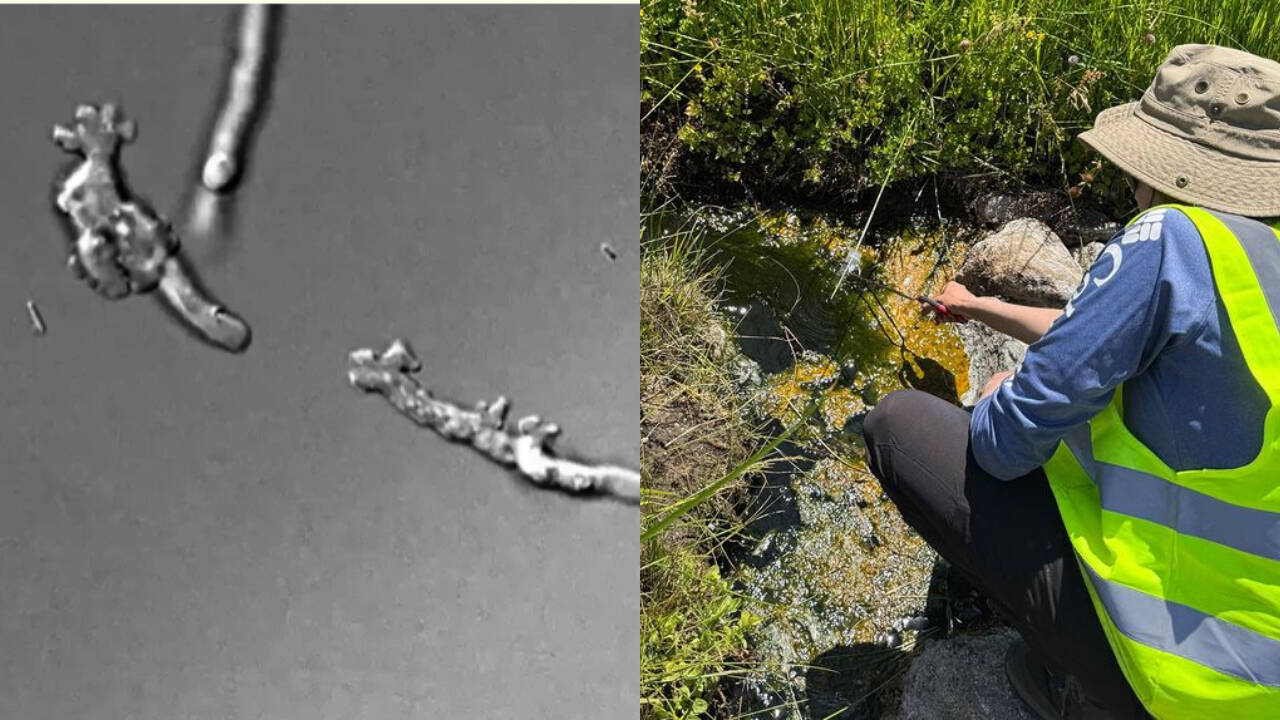
A newly discovered amoeba in California has established a remarkable biological milestone by surviving temperatures up to 158 degrees Fahrenheit. This discovery shatters previous thermal limits recorded for complex life forms, pushing the boundary of where organisms can thrive. Researchers have documented the resilient microorganism operating in surprisingly hot aquatic environments within the state.
While simple single-celled organisms like bacteria and archaea frequently inhabit extreme environments such as hydrothermal vents and hot springs, complex eukaryotic life has historically struggled at such high temperatures. Eukaryotes possess a membrane-bound nucleus and cellular machinery that typically denatures or fails when exposed to intense heat. The newly identified amoeba defies these standard biological constraints, enduring conditions that would prove fatal to nearly all other multicellular or complex single-celled organisms.
The finding opens new avenues of research into cellular adaptation and the physiological mechanisms that protect proteins and DNA from thermal destruction. Scientists are particularly interested in understanding how the organism maintains structural integrity and metabolic function under such extreme thermal stress. Insights gained from this California specimen could have significant implications for biotechnology and the study of extremophiles.
Furthermore, this discovery broadens the scientific understanding of habitability limits on Earth and potentially on other worlds. Astrobiologists often look to extremophiles on our planet as analogs for life that might exist in harsh extraterrestrial environments. Documenting a complex organism at 158 degrees Fahrenheit suggests that eukaryotic life may be capable of adapting to much harsher conditions than previously believed.
Researchers plan to continue analyzing the amoeba to map out its genetic makeup and cellular pathways. By pinpointing the specific traits responsible for its heat tolerance, the scientific community hopes to unlock fundamental secrets of resilience. The discovery serves as a reminder of the vast, unexplored biodiversity still hidden within unique ecosystems across the globe.
Reporting based on coverage first published by The Times of India. Read the original report at The Times of India.