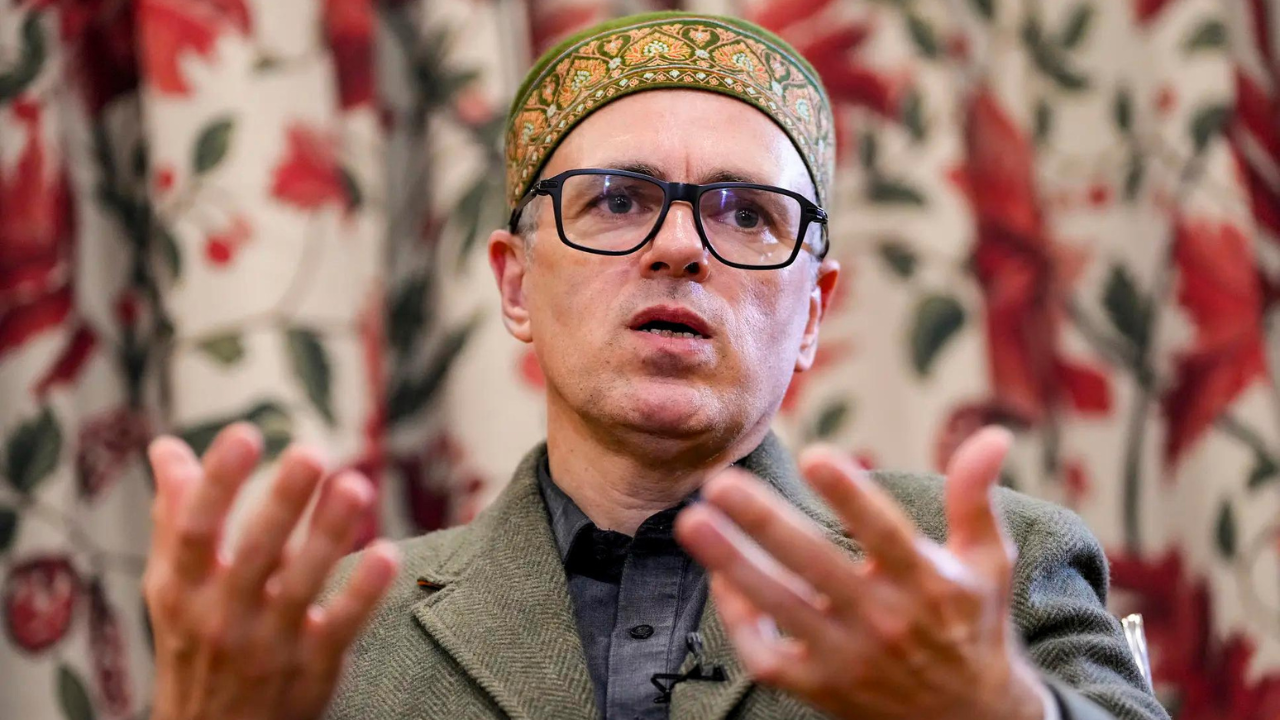
Jammu and Kashmir Chief Minister Omar Abdullah has offered praise for India's recent diplomatic performance on the international stage while simultaneously voicing strong objections to the central government's domestic legislative agenda. Speaking on regional developments, Abdullah pointed to the outcomes of the recent Brics summit as a notable success for Indian foreign policy. He specifically drew attention to the joint declaration issued by the member nations, which included a unified and explicit condemnation of the deadly terrorist attack in Pahalgam.
The regional leader framed the international coalition's stance on the Pahalgam incident as a validation of New Delhi's persistent counter-terrorism messaging abroad. By securing a collective denunciation from the major emerging economies, Indian diplomacy achieved a clear consensus against cross-border violence. Abdullah noted that such multilateral recognition is crucial for isolating extremist networks and keeping global pressure focused on regional security threats.
However, the tone shifted when the conversation turned to internal governance and administrative policies pursued by the federal administration in New Delhi. Abdullah raised serious objections regarding the proposed rollout of the Uniform Civil Code, arguing that the strategy being employed by the central authorities bypasses foundational democratic processes. He contended that sweeping reforms of this magnitude require thorough deliberation and formal enactment by Parliament rather than fragmented, state-level implementation methods that sidestep standard legislative oversight.
The debate surrounding the Uniform Civil Code has remained a contentious issue in Indian politics for decades, involving complex questions regarding religious personal laws and national legal integration. Critics and regional leaders frequently clash over whether such profound changes should be handled through centralized parliamentary consensus or tailored administrative steps. Abdullah's remarks add a prominent subnational voice to the ongoing national dialogue concerning federal authority, legislative propriety, and the governance of diverse communities.
The dual stance reflects the balancing act faced by regional leaders in India, who often evaluate national policies through separate domestic and international lenses. While diplomatic victories against terrorism garner broad, cross-party appreciation, internal socio-legal reforms continue to spark intense domestic friction. As discussions surrounding the civil code and federal jurisdiction persist, these divergent viewpoints underscore the ongoing political complexities governing center-state relations across the country.
Reporting based on coverage first published by The Times of India. Read the original report at The Times of India.