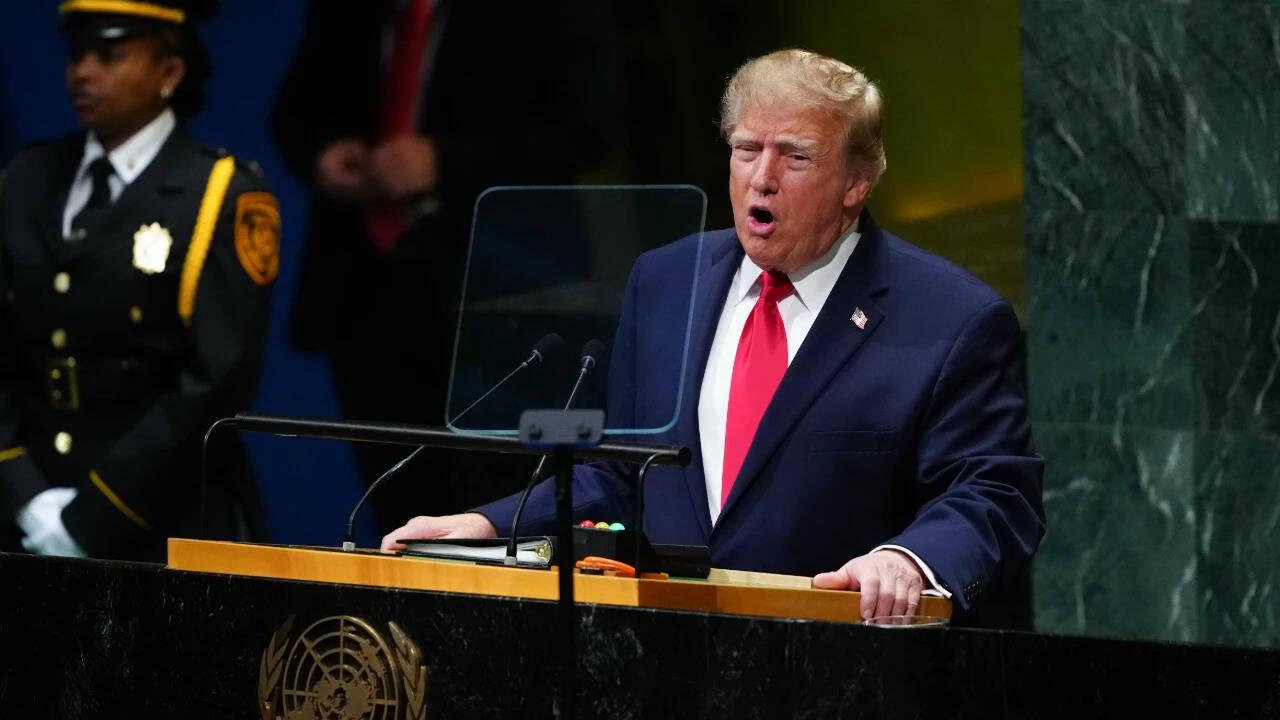
Donald Trump addressed the General Debate of the 81st session of the United Nations General Assembly, delivering a speech marked by stark contrasts in tone and message. A significant portion of the address was dedicated to highlighting various administration accomplishments, echoing a similar pattern from his appearance at the international body a year prior. During his previous address, the former president prominently cast himself as a leading candidate for the Nobel Peace Prize. However, references to the prestigious award were entirely absent from this year's proceedings.
As the address progressed, the rhetorical approach shifted toward a noticeably sharper and more confrontational stance. International institutions became primary targets of criticism during this segment of the speech. Trump launched direct verbal attacks against the International Criminal Court, challenging its legitimacy and mandate. Similar disapproval was directed at the environmental framework promoted by the United Nations, alongside strong critiques of UNESCO.
The juxtaposition between listing national achievements and issuing severe warnings created a complex narrative before the global audience. Observers noted that the address moved smoothly from recounting diplomatic and domestic milestones to condemning multilateral organizations that oversee international law and cultural preservation. This duality highlighted ongoing tensions between nationalist governance models and traditional global institutions.
The annual UN General Assembly gathering regularly serves as a major platform for world leaders to outline their foreign policy priorities and address domestic constituencies. Trump used the high-profile venue to reiterate opposition to international bodies that his administration views as encroaching on national sovereignty. The critique of global climate initiatives underscored longstanding disagreements over environmental policy and international treaties.
Diplomatic analysts pointed out that the speech reflected a broader strategy of challenging established global governance frameworks while simultaneously attempting to project strength and international success. The absence of any mention of the Nobel Peace Prize signaled a departure from the self-promotional themes that dominated his prior appearance at the forum. Instead, the focus settled firmly on a hardline critique of globalist agencies and policies.
The proceedings at the UN headquarters drew intense scrutiny from international delegations and media outlets alike. By alternating between claims of peaceful resolution and harsh rebukes of global entities, the address captured the complex and often confrontational nature of current international relations. The overarching message left delegates with a clear view of an administration determined to confront international oversight.
Reporting based on coverage first published by The Times of India. Read the original report at The Times of India.