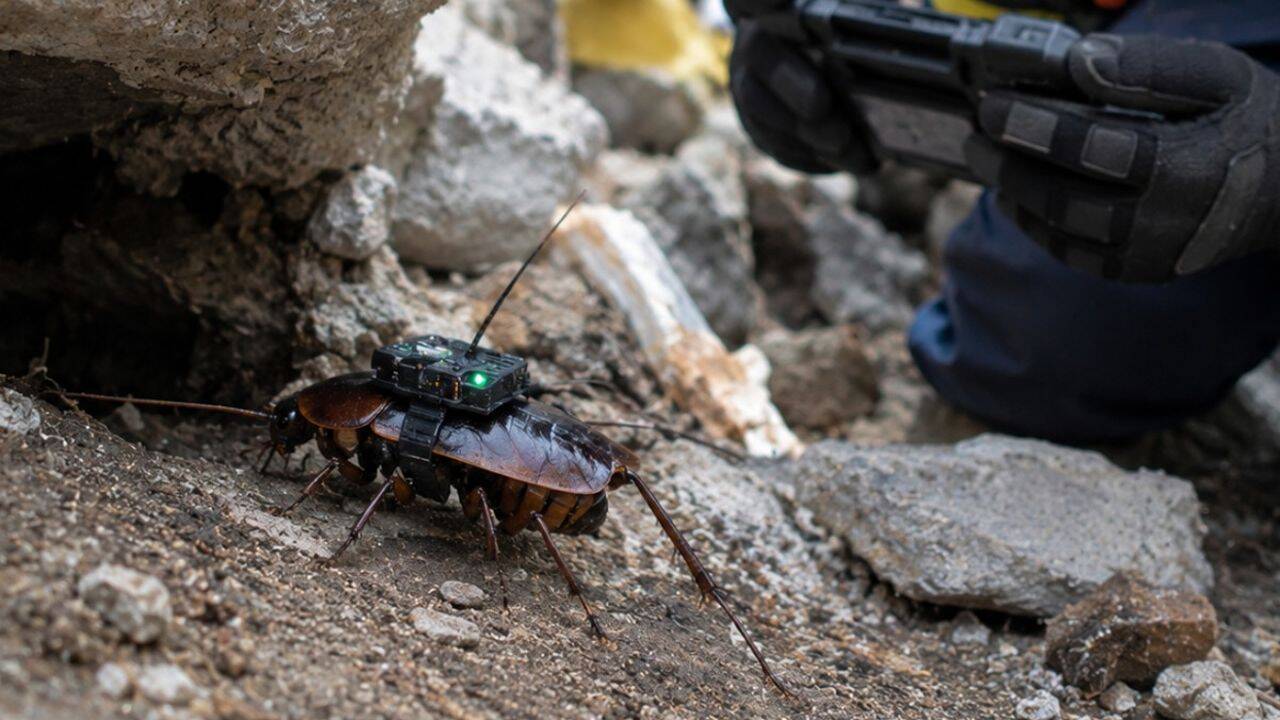
Scientific teams in Australia have successfully integrated advanced technology with large insects, creating living cyborgs designed to navigate treacherous environments during natural disasters. These modified creatures feature specialized micro-equipment, including miniature imaging devices and payload compartments, allowing them to access areas that remain entirely unreachable for standard rescue machinery.
During recent trial phases, the modified insects demonstrated a remarkable ability to traverse tightly restricted passages and obstructed rubble. Operating remotely, handlers successfully directed the creatures along precise routes to designated targets. Upon arrival at these simulated disaster zones, the insects effectively deployed small quantities of emergency medication.
Urban search and rescue operations frequently face severe logistical challenges following major earthquakes, structural collapses, or industrial accidents. Heavy excavators and robotic units often struggle with maneuverability inside narrow gaps, whereas living organisms naturally excel at squeezing through tight spaces. Integrating biological mobility with modern electronics aims to bridge this critical operational gap.
The current apparatus relies on lightweight solar-powered elements and miniature control chips attached to the backs of the specimens. These components enable operators to steer the creatures without harming them, utilizing mild neural stimulation to guide their direction. The payloads carried by the insects are kept minimal to ensure normal movement speeds remain unaffected.
Researchers plan to expand trial parameters to assess how the technology performs under unpredictable field conditions. Future evaluations will focus on durability, battery longevity, and navigation accuracy amid extreme debris and fluctuating weather. If subsequent trials prove successful, these specialized insects could soon become a standard asset for emergency response units worldwide.
Reporting based on coverage first published by The Times of India. Read the original report at The Times of India.