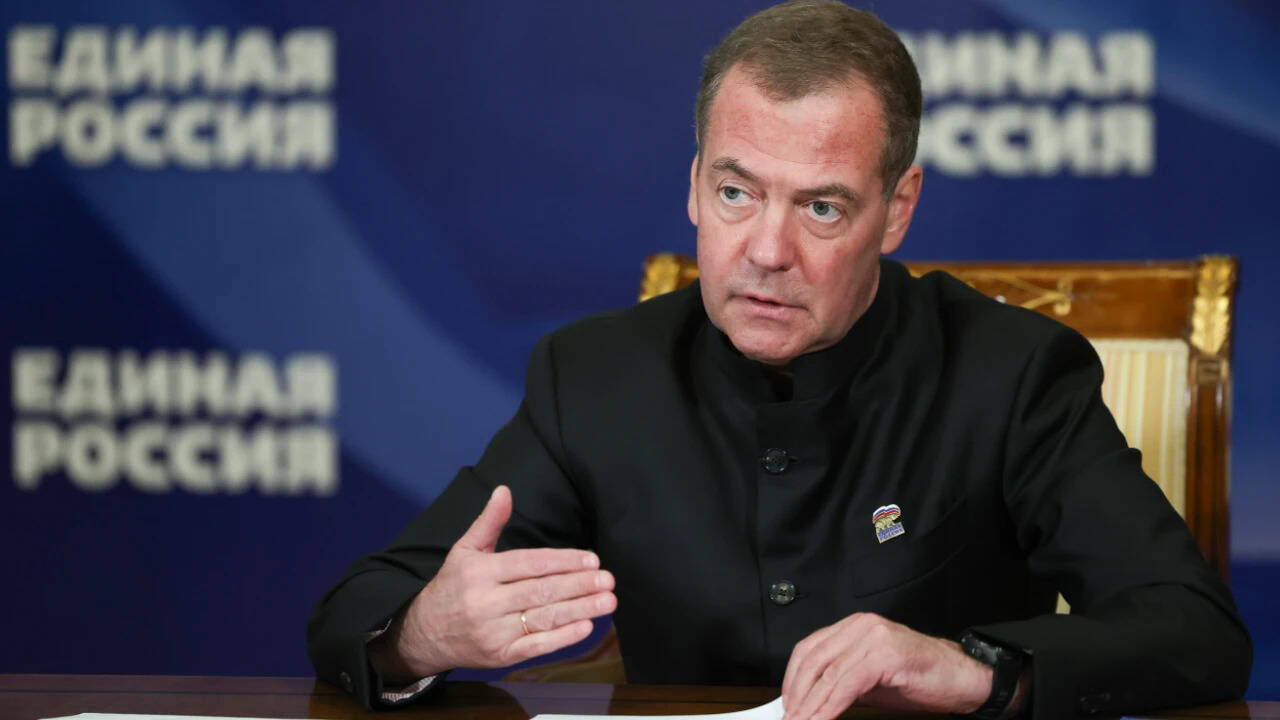
Dmitry Medvedev has publicly suggested that Moscow should adopt a strategy of military deterrence in response to ongoing economic and political penalties imposed by the United States. The high-ranking Russian official outlined his perspective on how the Kremlin ought to manage hostile actions from Washington, pointing toward a more assertive posture on the global stage.
Medvedev, who currently serves as the deputy chairman of Russia's Security Council, argued that diplomatic protests and standard countermeasures are no longer sufficient against what he views as relentless economic pressure. By emphasizing military deterrence, the former Russian president signaled that Moscow might consider expanding its strategic readiness to counter foreign restrictions.
The latest remarks highlight the continuing friction in relations between Moscow and Washington, which have deteriorated significantly over regional conflicts and diplomatic expulsions. Economic sanctions have long been a primary tool used by the United States and its Western allies to punish Russia for its foreign policy decisions. In return, Russian officials frequently issue strong rhetorical warnings, though specific operational shifts in military posture often remain ambiguous.
While analysts debate the practical implications of Medvedev's statements, they reflect a broader pattern of hardening rhetoric from the Russian leadership. Observers note that such declarations are often aimed at both domestic audiences and international competitors to project strength amid persistent economic isolation.
The latest developments add to a growing list of grievances exchanged between the two nuclear powers as bilateral communication channels remain severely restricted. As both sides dig into their respective positions, international observers continue to monitor the situation closely for any signs of actual policy changes or escalations in geopolitical tension.
Reporting based on coverage first published by The Times of India. Read the original report at The Times of India.