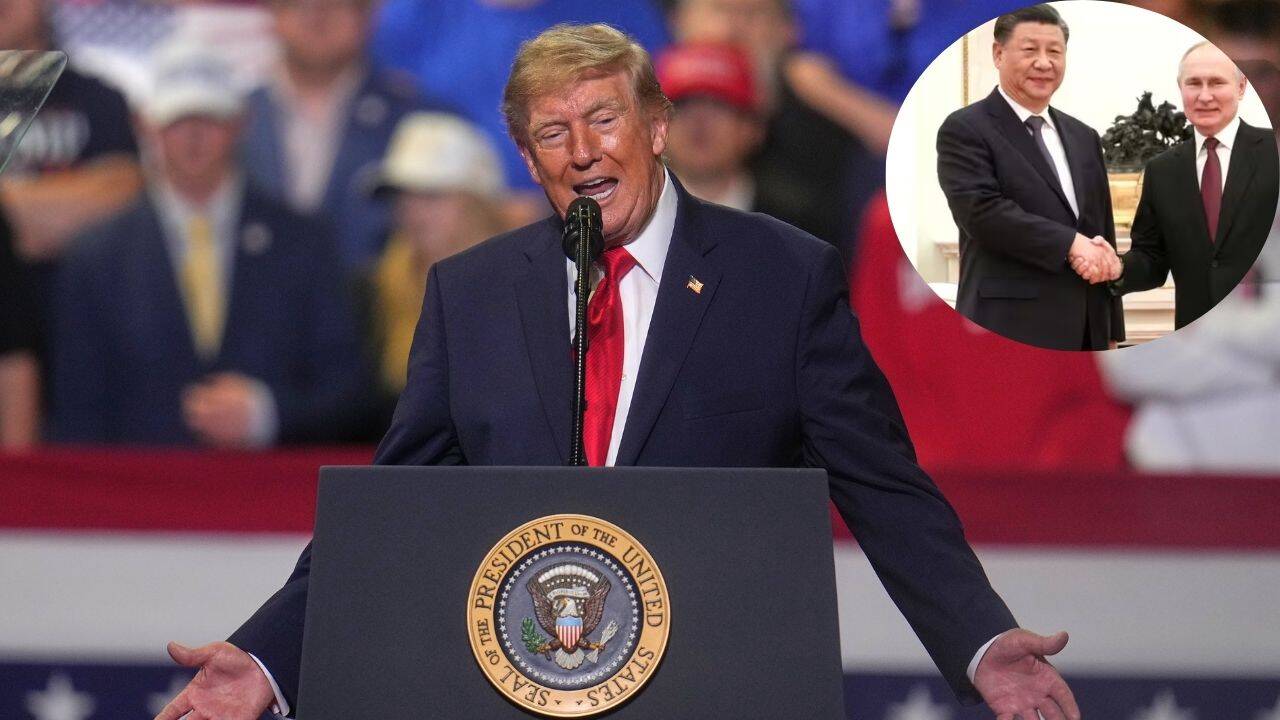
Former United States President Donald Trump has publicly rejected assertions that Moscow and Beijing are providing substantial backing to Tehran. In recent remarks addressing international security dynamics, Trump argued that the leadership in both Russia and China possesses too many economic and strategic interests at stake to risk entangling themselves deeply in conflicts involving Iran.
The comments offer a distinct perspective on the complex geopolitical alignments connecting West Asia and major global powers. Observers frequently debate the extent of cooperation between Tehran, Moscow, and Beijing, particularly regarding energy trade, diplomatic shielding at the United Nations, and broader strategic partnerships. However, Trump asserted that the potential fallout from openly aiding Iran in military confrontations would outweigh any prospective benefits for either Russia or China.
Both Beijing and Moscow maintain multifaceted relationships with Tehran. China has historically remained a primary purchaser of Iranian petroleum, providing a vital economic lifeline despite international sanctions. Meanwhile, Russia and Iran have expanded their defense and diplomatic coordination, especially in the context of regional instability and shared opposition to Western policies.
Despite these ties, international relations experts often point out that China and Russia also maintain extensive commercial and diplomatic links with other global economies, including the United States and European nations. Trump emphasized this pragmatic calculation, suggesting that neither global power would be willing to jeopardize its broader international standing or economic stability for the sake of supporting Iran in a major escalation.
The remarks arrive amid ongoing global discussions regarding security architectures in the Middle East and the shifting nature of alliances among nuclear-armed states. Analysts continue to monitor how major capitals navigate these competing pressures, balancing bilateral partnerships against the risk of broader geopolitical friction. Trump's assessment highlights the view that pragmatic self-interest remains the primary driver of foreign policy for both Beijing and Moscow.
Reporting based on coverage first published by The Times of India. Read the original report at The Times of India.