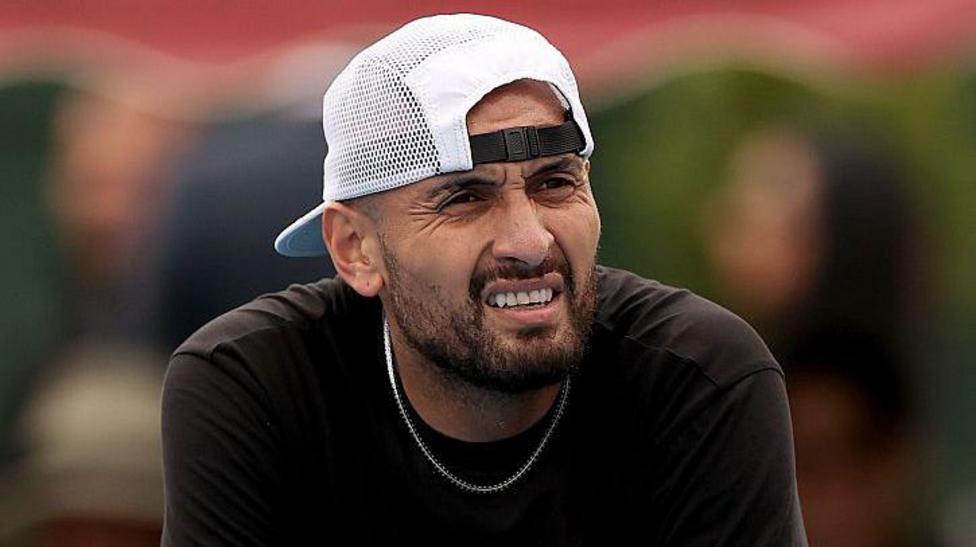
Australian tennis player Nick Kyrgios is facing a potentially career-altering suspension following a positive test for a cocaine metabolite. The 31-year-old athlete was provisionally suspended on August 4 after returning a sample containing benzoylecgonine during a grass-court tournament in Mallorca in June.
The ultimate length of the sanction will hinge on whether regulatory bodies determine the substance was consumed outside of active competition. Under anti-doping guidelines, an athlete is classified as competing from the official start of a tournament's draw until their final exit from the event.
Kyrgios played limited matches prior to the grass-court swing, having made his previous appearance at the Australian Open in January. Regulators note he was officially in competition in Stuttgart during early June and subsequently in Mallorca, where he was eliminated in the opening round on June 22 and provided the flagged sample.
If Kyrgios can demonstrate to the International Tennis Integrity Agency that the substance was ingested prior to the tournament window, the case could be resolved without convening an independent tribunal. Should he also agree to participate in an approved rehabilitation programme, guidelines allow for the penalty to be reduced significantly, potentially to a single month. Because his provisional ban commenced on August 4, a swift resolution could theoretically clear him to return to the sport as early as September 4.
Conversely, failure to prove out-of-competition use could result in a much harsher penalty, with maximum regulations allowing for a ban of up to four years. Recent precedents under updated anti-doping codes show that athletes who prove non-performance-enhancing ingestion well ahead of a match and complete treatment programmes have successfully secured reduced one-month suspensions.
The situation draws potential parallels to recent high-profile anti-doping cases involving other top tennis stars, whose lenient penalties drew sharp public criticism from Kyrgios himself. Those previous cases involved shorter suspensions for contaminated substances, contrasting with the rigorous scrutiny applied to recreational drug violations.
Reporting based on coverage first published by BBC Sport. Read the original report at BBC Sport.


