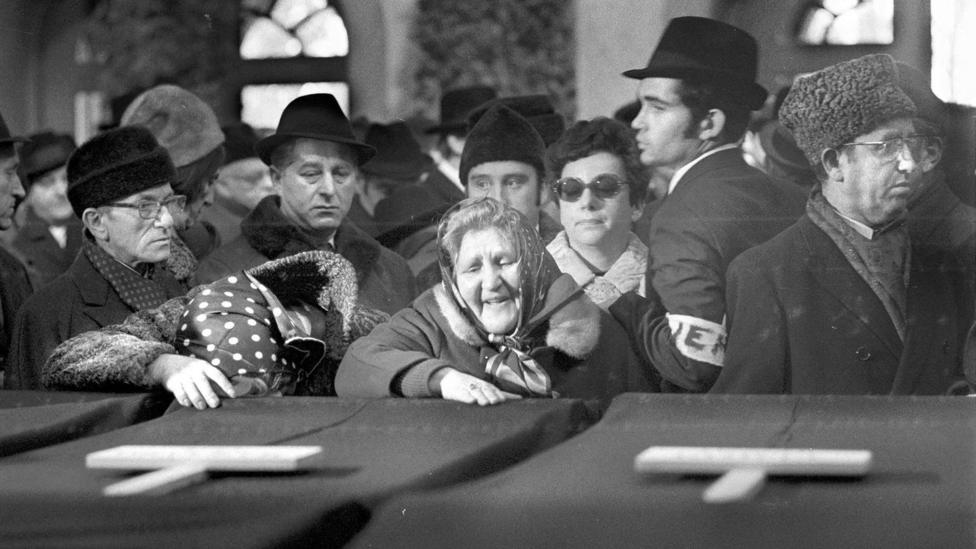
German law enforcement authorities believe they have finally identified the perpetrator behind a devastating 1970 arson attack on a Jewish facility in Munich. The tragedy, which claimed seven lives, stands as one of the most severe violent incidents directed against Germany's Jewish population in the aftermath of the Second World War.
The fatal blaze occurred on the evening of February 13, 1970, at a Jewish community building on Reichenbachstrasse that housed a retirement home. According to prosecutors, an individual poured petrol into the wooden stairwell of the facility before igniting it, causing flames to race upward through the structure.
Seven residents, all of them Holocaust survivors between the ages of 59 and 71, lost their lives in the disaster. Four victims perished within the smoke-filled stairwell, another died after leaping from a window, and roughly 15 other people sustained injuries before emergency crews could fully contain the situation.
Investigators indicate that the breakthrough in the decades-old cold case stems from a tip provided last year. A female witness came forward following the death of a relative who had maintained a close connection to the suspect.
Law enforcement officials stated that the newly uncovered testimony pointed directly to a 25-year-old lone actor with deeply entrenched antisemitic views. Witnesses recounted that the man harbored an obsession with Adolf Hitler dating back to his youth, owned a Hitler Youth knife given to him by his father, and had previously received a juvenile conviction for destroying public telephone booths.
According to the evidence gathered by authorities, the suspect became enraged on the night of the attack following an unsuccessful jewelry store burglary in the vicinity. Witnesses reported hearing the man make hostile remarks near the community center shortly before the fire, complaining about the Jewish community and declaring an intention to burn the building down. Roughly fifteen minutes later, the facility was engulfed in flames.
Despite the significant development, the conclusion of the inquiry arrives too late for criminal prosecution. The primary suspect, identified by German media as Bernd V., passed away in 2020.
Prosecutors emphasize that the presumption of independence and innocence technically remains in place despite the suspect's death. Furthermore, investigators have found no indications that any additional accomplices aided in the planning or execution of the crime.
The case was previously examined by law enforcement in the early 1970s after a cellmate of the suspect alerted authorities to his possible involvement. At that time, however, investigators lacked sufficient proof to move forward, and the inquiry was ultimately shelved in 2017 before being revived last year.
Reporting based on coverage first published by BBC News. Read the original report at BBC News.


