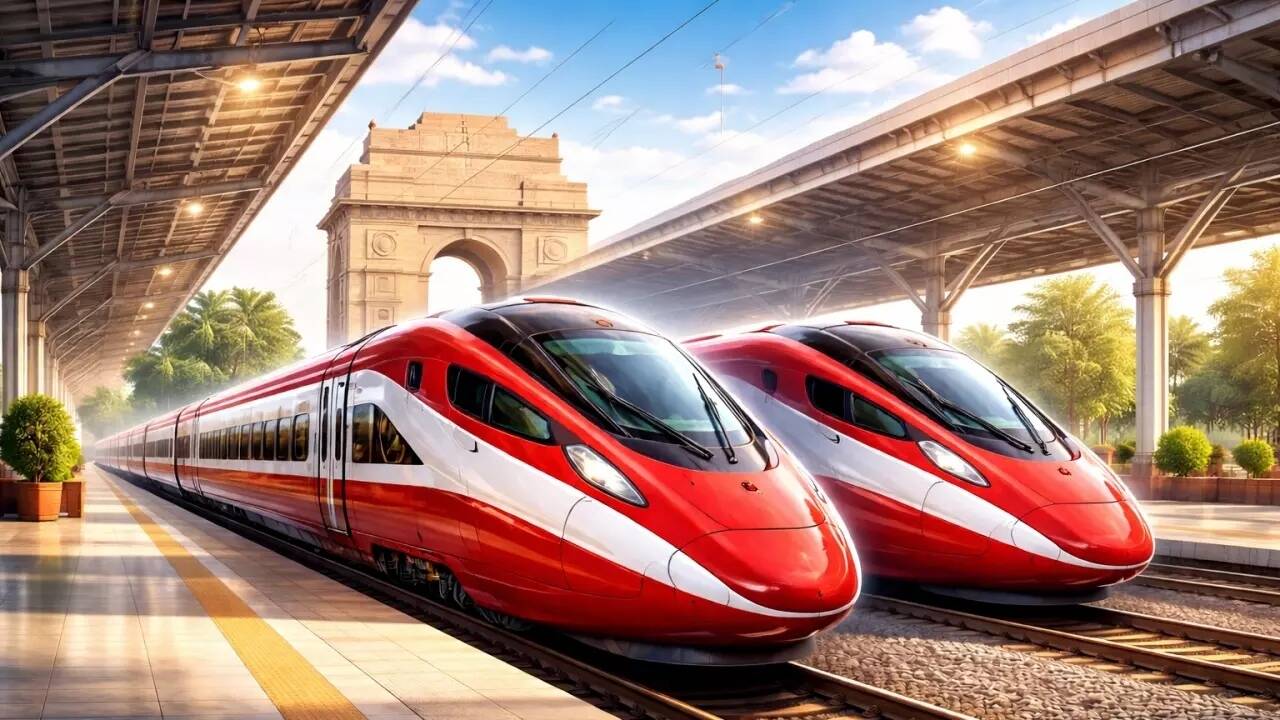
Indian Railways is currently advancing plans to develop seven new high-speed rail corridors across the country, a move designed to drastically reduce travel times between major economic and cultural centers. Once completed, these proposed routes will allow passengers to travel at speeds averaging around 300 kilometers per hour, fundamentally transforming intercity transit across the nation.
Among the most ambitious proposals in the newly outlined network is a corridor connecting Mumbai and Pune. According to current projections, this high-speed link will enable commuters to complete the journey between the two bustling cities in just 48 minutes. Another major route slated for development will connect the national capital of Delhi with the holy city of Varanasi, bringing travel time down to under four hours.
These high-speed rail initiatives form part of a broader modernization strategy aimed at upgrading India's transportation infrastructure to meet rising passenger demand. While traditional express trains often require many hours or even days to traverse long distances, the introduction of bullet trains is expected to offer a rapid and efficient alternative for millions of travelers.
High-speed rail systems generally operate at speeds starting around 250 kilometers per hour, with advanced networks capable of reaching 300 kilometers per hour or more. The upcoming Indian corridors will incorporate these advanced velocity standards, bridging vast distances in fractions of the time currently required by conventional rail networks.
Detailed timelines and construction schedules for all seven corridors are being finalized by transport authorities. As these projects move from the planning phase into execution, they are expected to generate significant economic benefits by improving regional connectivity, boosting tourism, and facilitating faster business travel between key urban hubs.
Reporting based on coverage first published by The Times of India. Read the original report at The Times of India.