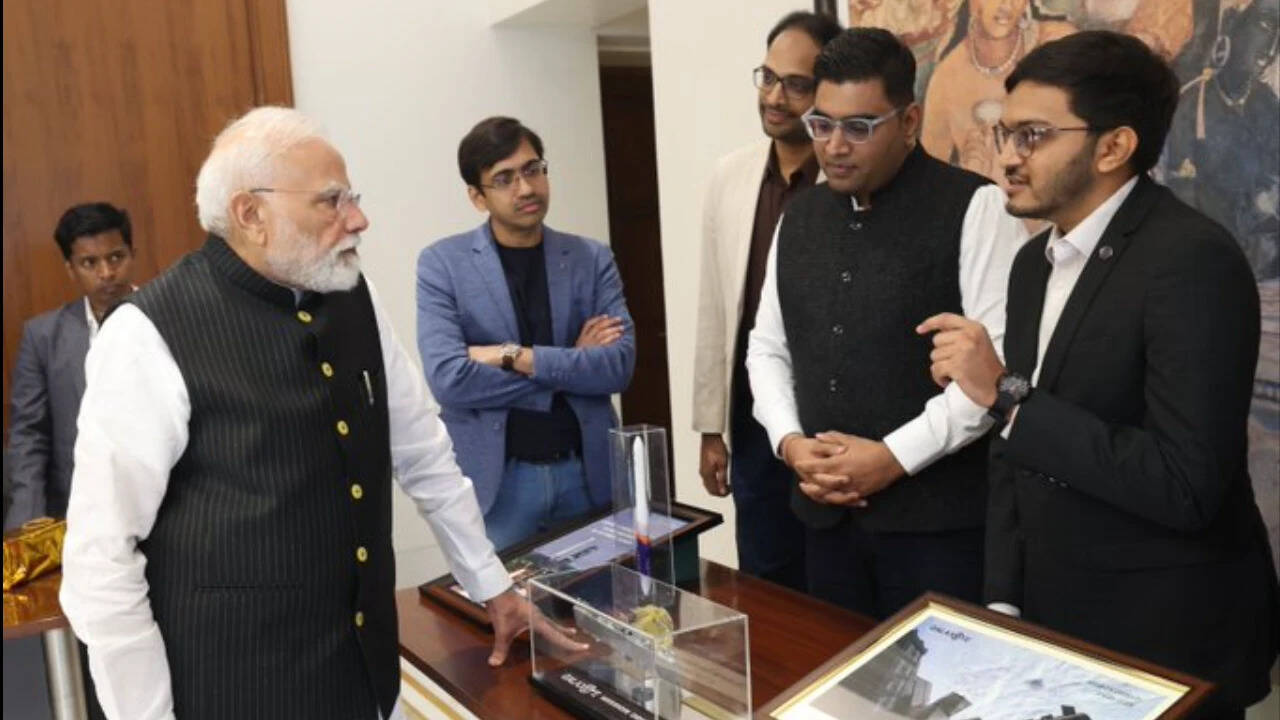
Prime Minister Narendra Modi recently met with the chief executive officers of twenty leading space technology startups in India. During the gathering, the prime minister encouraged the industry leaders to expand the practical application of space innovations to improve public welfare and everyday life across the nation.
The discussion focused on how emerging private enterprises can harness advanced technology to address grassroots challenges. Government officials emphasized that integrating space applications into governance and daily services will help bridge developmental gaps and foster inclusive progress.
According to projections shared during the deliberations by the head of the Indian National Space Promotion and Authorization Centre, the country's commercial space economy is poised for dramatic expansion. Experts anticipate that the domestic space sector will grow significantly from its current valuation of approximately eight billion dollars to reach forty-four billion dollars by the year 2033.
This ambitious economic trajectory reflects the ongoing transformation of India's aerospace landscape following recent structural reforms. For decades, the nation's space activities were driven almost exclusively by the state-run Indian Space Research Organisation. The opening of the sector to private participation has since enabled numerous entrepreneurial ventures to develop innovative launch vehicles, satellites, and data analytics tools.
Industry representatives at the meeting shared their current projects and outlined future commercial goals with the prime minister. They discussed the regulatory environment, funding opportunities, and the need for continued government support to help young enterprises scale their operations globally.
The prime minister acknowledged the vital role that private entrepreneurship plays in technological advancement and economic diversification. He urged the startup leaders to maintain a strong focus on indigenous research and development while ensuring their solutions remain accessible and affordable for the general public.
Reporting based on coverage first published by The Times of India. Read the original report at The Times of India.