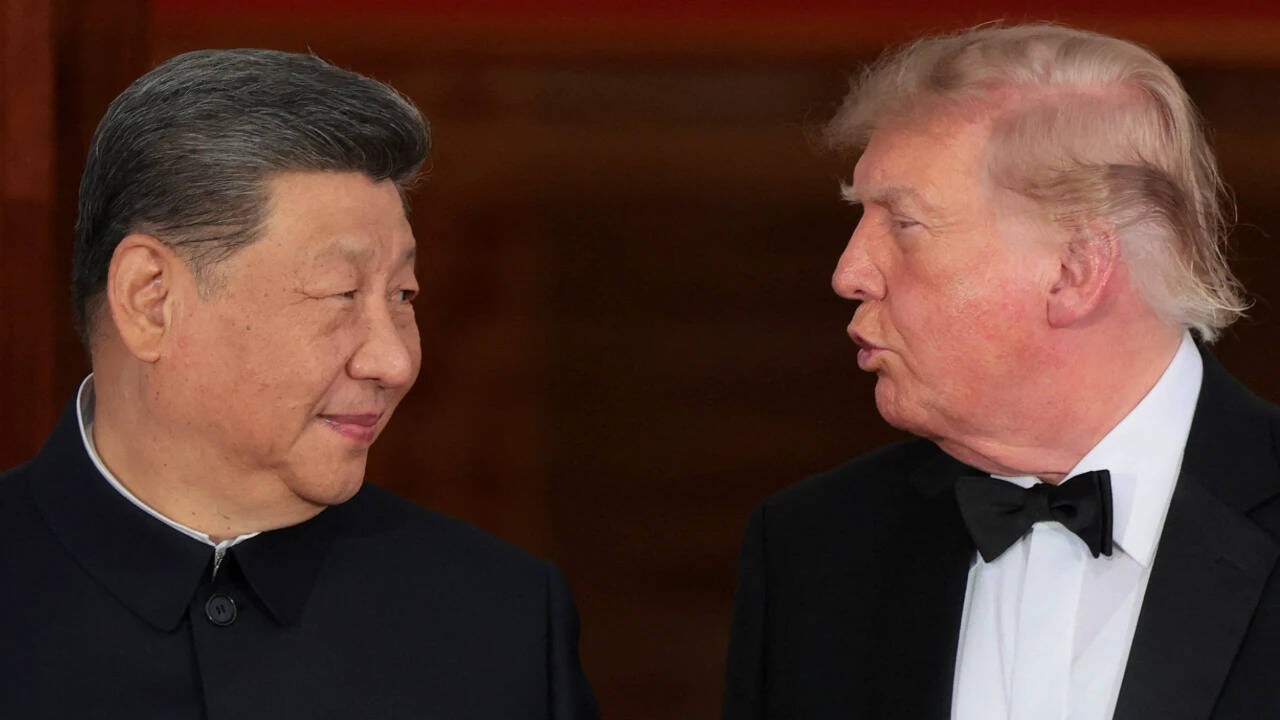
Industry leaders and technology visionaries are increasingly invoking atomic weaponry when discussing the rapid advancement of artificial intelligence. Prominent figures across the tech sector frequently warn that next-generation computer models pose severe risks that match or exceed those of traditional armaments. These comparisons have sparked intense debate among policy experts regarding how modern technological competition resembles, yet fundamentally differs from, past historical conflicts.
Tech executives often draw parallels between the race for computational supremacy and the mid-century development of nuclear bombs. Elon Musk has publicly asserted that advanced systems present far greater hazards than atomic warheads. Dario Amodei, the chief executive of Anthropic, has characterized the most advanced algorithms as comparable to weapon-grade radioactive substances. Meanwhile, OpenAI leader Sam Altman has suggested that global oversight bodies, such as the International Atomic Energy Agency, could serve as a potential model for regulating dangerous software.
Despite these frequent analogies, security analysts point out crucial differences in how artificial intelligence develops compared to fissile materials. Building nuclear arms requires rare physical resources like enriched uranium and massive, easily monitored industrial facilities. In contrast, advanced code relies on digital infrastructure, readily available data, and software that can be duplicated and distributed across the globe instantaneously. This intangible nature makes the technology significantly harder to track, contain, or restrict through traditional non-proliferation treaties.
The geopolitical rivalry between the United States and China further complicates potential regulatory efforts. During the Cold War, rival superpowers established mutual deterrence frameworks and arms control agreements because physical weapons were costly and conspicuous. The current technological contest involves decentralized corporate labs and dual-use capabilities that serve both commercial and military purposes. Because everyday software applications share the same underlying architecture as potentially dangerous systems, drawing a clear line between peaceful innovation and military risk remains extraordinarily difficult.
As global laboratories continue to push the boundaries of machine learning capabilities, governments face mounting pressure to establish effective safeguards. International policymakers are struggling to design oversight mechanisms that can keep pace with an industry moving at a blinding speed. Without physical checkpoints or easily inspectable manufacturing plants, traditional enforcement methods may prove inadequate for managing the escalating competition between global superpowers.
Reporting based on coverage first published by The Times of India. Read the original report at The Times of India.