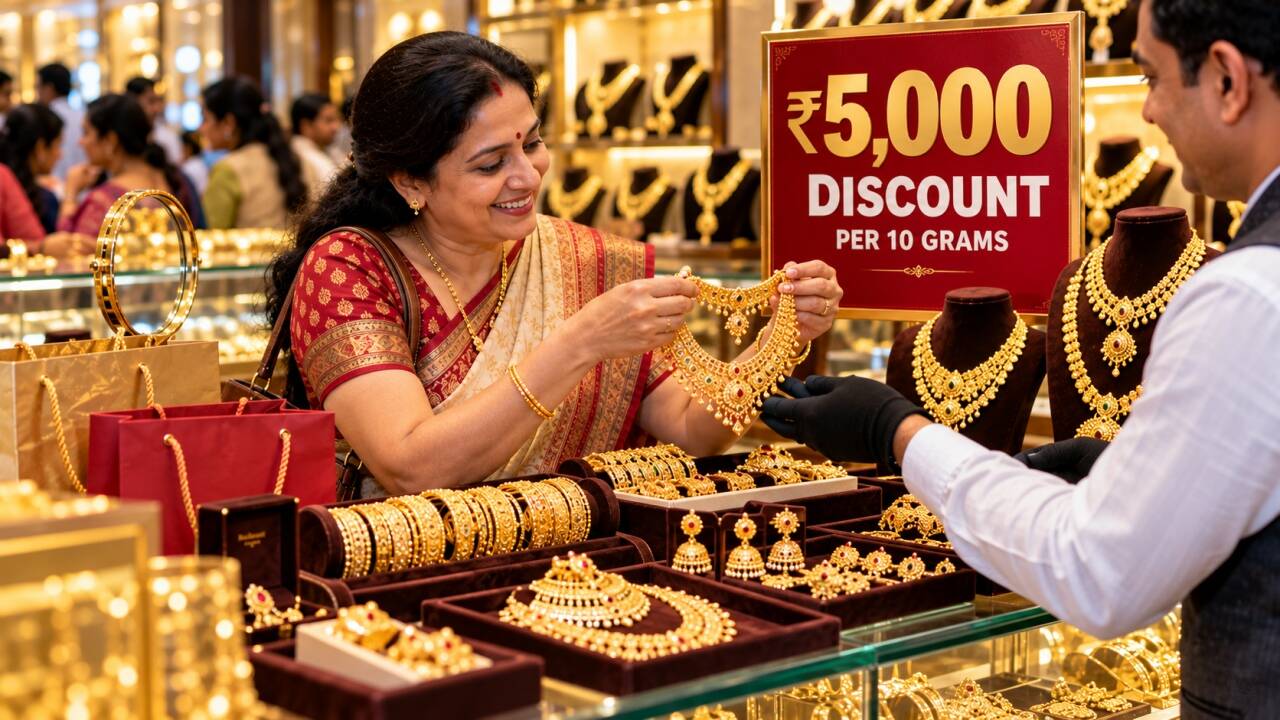
A thriving informal market for precious metals has emerged across India, offering substantial financial incentives for buyers willing to complete transactions using physical cash. Individuals making bulk purchases of the yellow metal are currently securing discounts of approximately five thousand rupees per ten grams compared to standard market valuations.
Within these off-the-record arrangements, large-scale buyers can reduce their overall acquisition costs by roughly six percent. The practice relies on physical currency rather than digital payment channels, allowing participating merchants to bypass specific governmental levies. By avoiding these fiscal obligations, dealers are able to pass a portion of the resulting savings directly on to the consumer.
This resurgence of cash-driven commerce functions contrary to official regulatory intentions. Economic policymakers previously implemented measures specifically designed to curb the nation's appetite for the precious asset and encourage formal banking channels. Instead, the regulatory framework has unintentionally stimulated informal trade networks as buyers and sellers seek ways to optimize their transactions.
Gold holds deep cultural and economic significance throughout the country, serving as both a traditional store of wealth and a staple for weddings and festivals. When regulatory costs rise, market participants frequently adapt by finding alternative pathways to complete their exchanges. The persistence of these untracked cash deals highlights the ongoing challenge authorities face in fully regulating the trade of physical commodities.
Industry observers note that while these arrangements offer immediate monetary benefits to consumers, they also diminish transparency within the precious metals sector. As long as the financial incentives for off-the-record deals remain attractive, buyers continue to utilize informal channels for acquiring bulk quantities. Regulatory bodies and market participants remain at odds as policymakers attempt to balance revenue collection with consumer demand.
Reporting based on coverage first published by The Times of India. Read the original report at The Times of India.